
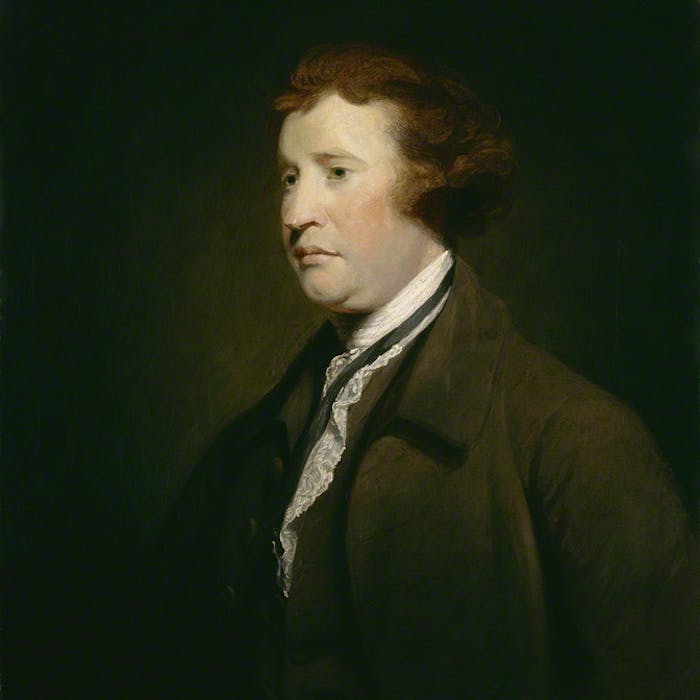
Edmund Burke: shaping political philosophy
Edmund Burke was an Anglo-Irish statesman, economist, and philosopher. Born in Dublin in 1729, Burke served as a member of parliament between 1766 and 1794 in the House of Commons with the Whig Party. His philosophy has much influenced British political thinking, particularly the Conservative tradition.
Burke was a proponent of underpinning virtues with manners in society, and of the importance of religious institutions for the moral stability and good of the state. These views were expressed in his publication A Vindication of Natural Society. He was a critic of the actions of the British government towards the American colonies, including their taxation. Though he supported the rights of the colonists to resist imperial authority, he opposed the attempt to achieve independence. He is also remembered for his support for Catholic emancipation and his staunch opposition to the French Revolution.
In his Reflections on the Revolution in France, Burke asserted that the revolution was destroying the fabric of good society and traditional institutions, and condemned the persecution of the Catholic Church that resulted from it. These views made him the leading figure within the conservative faction of the Whig Party.
Burke's principles were founded on an exploration of the concept of “nature,” or “natural law.” Burke conceived that the emotional and spiritual life of man should be seen as based on finding harmony within the larger order of the universe. But natural human impulses required self-restraint and self-criticism generated from that wider quest to embrace natural harmony and essentially sympathetic to it. He believed that the essence of society and the state should be to make possible the full realisation of human potentiality, embody a common good, and represent an acceptance agreement on norms and ends.
For Burke, the best life begins in the “little platoons”—family, church, and local community—that orient men toward virtues such as temperance and fortitude. It is in the local and particular that we are able to live justly. In seeing political life as best conducted within an order of particular habits and presumptions—specifically, the order of the British Constitution. Burke resisted the attempts of some of his contemporaries to study man as if he could be viewed in isolation, apart from all the trappings of society.
In the 19th century, Burke was praised by both conservatives and liberals for this thinking which was very influential in shaping the philosophical foundations of modern conservatism into the 20th century. He died in 1797.
Further reading
Links to external websites are not maintained by Bite Sized Britain. They are provided to give users access to additional information. Bite Sized Britain is not responsible for the content of these external websites.