
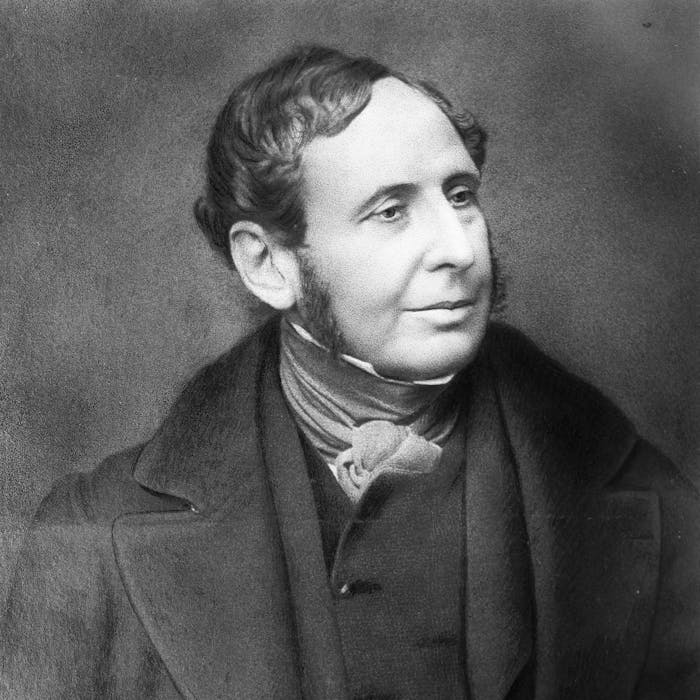
Robert FitzRoy - sea captain who also founded the Met Office
Vice-Admiral Robert FitzRoy, born in 1805 in Suffolk, was a distinguished 19th-century British naval officer, meteorologist, and explorer.
From a distinguished aristocratic family, FitzRoy joined the Royal Navy at a young age and quickly rose through the ranks.
One of FitzRoy's notable achievements was his role as the captain of HMS Beagle during its second voyage from 1831 to 1836. This expedition, famously known for Charles Darwin's presence on board, played a crucial role in advancing the understanding of natural sciences and laid the foundation for Darwin's groundbreaking work on evolution.
Fitzroy had chosen Darwin as a companion on board - a gentleman with whom he had a similar outlook. Aware of the loneliness of command and of the suicide of several of his male relatives and friends in similar circumstances, he hoped, thereby, to avoid their fate.
Despite his many talents, Fitzroy was highly strung and hot-tempered, with a tendency to take criticism badly. He was prone to grand and expensive gestures to further his scientific interests such as funding research vessels from his own pocket. This resulted in money troubles over time.
In late 1843, Fitzroy was made the second Governor of New Zealand. He was ultimately unsuccessful in this role, due to inadequate military and financial support from Britain.
Trying to keep the peace between the Maori and the colonists was a thankless task. Fitzroy's efforts to enforce a fair price for the sale of Maori land to incomers make him unpopular with the New Zealand Company who complained about him to the British authorities.
Fitzroy was recalled to Britain after only two years - judged a failure. His years spent at literally the ends of the earth had also derailed a promising political career at home.
Nevertheless, one of his greatest contributions to British history still lay ahead.
FitzRoy had a keen interest in meteorology. Recognising the importance of weather forecasting for maritime safety, he became the founder of the Meteorological Office - otherwise known as the Met Office.
FitzRoy introduced the use of storm warnings and is credited with coining the term "weather forecast." His pioneering work laid the groundwork for modern meteorology and weather prediction.
Sadly, FitzRoy died as he had long feared he would - by his own hand. Troubled by failing health and money worries and subject all his life to fits of depression, he took his own life in 1865.
FitzRoy's impact on scientific advancements and his dedication to the safety of seafarers continue to be recognized and remembered to this day - including by the area of sea named after him and heard every day during the Shipping Forecast.
Further reading
Links to external websites are not maintained by Bite Sized Britain. They are provided to give users access to additional information. Bite Sized Britain is not responsible for the content of these external websites.